

 ScienceABC News & Headlines
Scientists video REM-like sleep in Australian jumping spider species
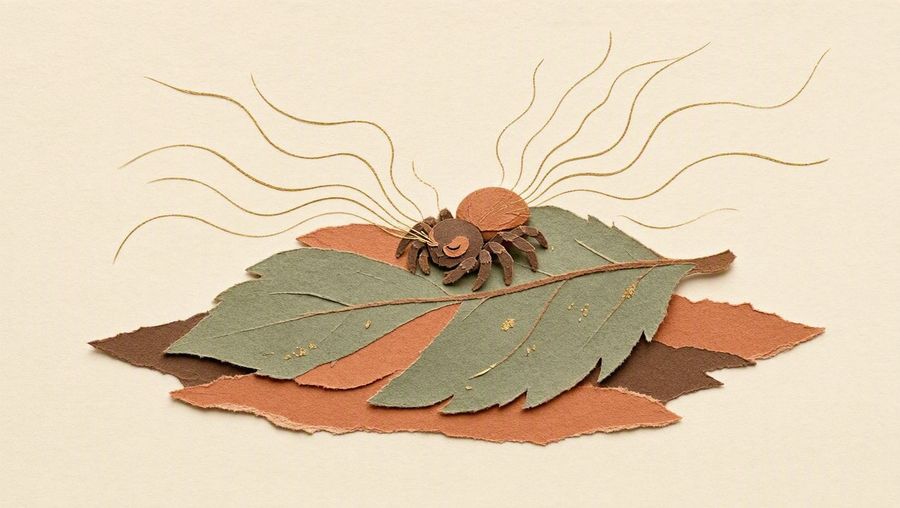
Scientists have confirmed that an Australian jumping spider experiences REM-like sleep, complete with eye movements and leg twitches, similar to humans dreaming.
The most comprehensive study of its kind confirms that jumping spiders go through two phases of sleep, including a REM-like state that is associated with human dreaming.
A new study published in the Proceedings of the National Academy of Sciences confirmed that Australian jumping spiders go through two distinct sleep stages.
The spider, Portia fimbriata from northern Australia, showed leg curls, eye movements and twitching during a REM-like phase, and was harder to wake during that stage.
Researchers say the findings suggest sleep architecture mirrors vertebrate sleep far more closely than expected, which could help scientists understand how sleep evolved across the animal kingdom.
While not everyone gets to enjoy some peaceful shut eye, it seems that more creatures than we thought enjoy a good kip.
Subtle eye flickers and leg curls captured on video confirm a small Australian jumping spider experiences the same kinds of movements we do during sleep, according to a new study.
Study co-author Daniela Rößler, a behavioural ecologist from the University of Bonn, said the sleep patterns of Portia fimbriata were structured in at least two parts.
"Spiders have distinct sleep stages, and that the architecture of their sleep mirrors key features of vertebrate sleep far more closely than anyone expected," she said.
The research, which the team hopes can help scientists understand how sleep has evolved through the animal kingdom, was published today in Proceedings of the National Academy of Sciences.
How to wake a spider
Portia fimbriata, which is found across Northern Australia, is a "dream species" for studying sleep, study co-author Nadja Geiger said.
"She is diurnal, highly visual and famously clever," Ms Geiger said.
"She also has a very clear night-time resting posture, sleeping upside down in a little web … this makes sleep easier to identify and study."
The team recorded the arachnids throughout the night, then carefully analysed the footage to identify the stages.
The spiders groomed themselves while they snoozed and drooped down slowly over the course of the night in a phase the researchers called quiescent.
This was followed by a REM-like sleep stage, complete with leg curls, eye movements and arm twitching as the spiders dosed.
Once the researchers had observed these two different phases, they could see what happened when they tried to wake the spider up.
"A hallmark sign of sleep is … [responding] slower or not at all to external stimuli," Ms Geiger said.
They woke the spiders up with a loud noise while they were still for more than 15 minutes in the quiescent stage, as well as when they showed signs of REM-like sleep and when they were visibly awake.
Similar to humans who have been woken from a nap, it took the spiders longer to respond when they were in this quiescent and REM-like state.
"This effect was particularly strong during the REM-like phase," Ms Geiger said.
"Responses were significantly delayed, and some spiders did not respond at all."
Spider sleep a (not so) controversial idea
Thomas White, an entomologist at the University of Sydney who studies invertebrate behaviour, said some people might think associating similar behaviours to animals that were so distantly removed from us was controversial.
"With spiders, you're talking about animals that have diverged 500 million years ago from all other vertebrates," Dr White said.
But he noted that scientists were becoming less hesitant as evidence mounted that similar behaviours occurred.
"We readily see our dog lying down and its eyes are twitching and it's kicking its little paws. Essentially what [the researchers] are showing here is that something similar," he said.
"Yes, [spiders] diverged a very long time ago, but if we're willing to extend that inference to our dogs, our cats, or even animals that are quite unlike us like reptiles, then what's stopping us from extending that inference … in animals that are very unlike us?"
Dr White said that the study built on research from the same team a few years ago that found some possible REM-like sleep in jumping spiders.
"But this goes a step further in mapping out different behavioural facets of sleep-like behaviour," he said.
"This paper is far and away the most complete behavioural case for sleep in any arachnid."
What can spider sleep tell us?
According to Dr Rößler, understanding how spiders sleep may help researchers explain why sleep exists at all.
"If animals with such different brains and sensory worlds show structured sleep with REM‑like phases, it suggests that the basic architecture of sleep may be far older and more widespread than we thought," she said.
"Comparing sleep across such different animals can help us understand how sleep evolved, which features are ancient, and what functions different sleep stages may serve."
The researchers are now looking at studying sleep in spiders in the wild, including fieldwork in northern Queensland and Western Australia.
"This allows us to ask how natural conditions and anthropogenic changes, such as artificial light and habitat disturbance, influence sleep outside the laboratory," Dr Rößler said.
"We’d love for this kind of research to help spread a little more curiosity and appreciation for these charismatic animals."
Five minutes for you


More from Cuppa
Israel election live: polls open in most consequential vote in country’s historyIsraelis are voting in what is being called the most consequential election in the country's history, with polls suggesting Netanyahu's coalition is likely to lose its majority.
Do spiders dream? Scientists just found a surprising clueScientists studying an Australian jumping spider have found it experiences two distinct sleep stages, including one resembling REM sleep, suggesting sleep evolved across very different animals.
PM admits Marrickville Golf Club grant is not to fix sewage issues, after department sinks his claimPM Anthony Albanese has admitted he was wrong to tell parliament a $6 million grant to Marrickville Golf Club was for fixing sewage issues, after his own department contradicted him.
Australian politics live: Coalition tells Albanese to ‘stop the spin’ on $6m golf grant; Labor promises ‘swift response’ on MP safetyLabor is under pressure over a $6m golf club grant after officials confirmed it did not include the sewerage works Albanese cited as justification.
One antibody, three targets: New strategy against triple-negative breast cancerResearchers have developed a new antibody that attacks triple-negative breast cancer on three fronts at once, showing promising results in early lab studies.
First Australian charged under deepfake pornography laws avoids jailAustralia's first person charged under deepfake pornography laws has avoided jail, after a judge accepted he had no malicious motive when he created explicit AI images of a teenage girl.
Beau Lamarre-Condon tells jury he wanted to report deaths but friend encouraged him to dispose of bodiesFormer NSW police officer Beau Lamarre-Condon told his murder trial that a friend encouraged him to dispose of the bodies of Jesse Baird and Luke Davies rather than go to police.
Sleeping elephant seals help scientists find elusive whales in remote Southern OceanScientists fitted listening devices to sleeping elephant seals to record whale and dolphin calls across the remote Southern Ocean, picking up humpback, blue, fin and sperm whale sounds.