

 AustraliaABC News & Headlines
First Australian charged under deepfake pornography laws avoids jail
Australia's first person charged under deepfake pornography laws has avoided jail, after a judge accepted he had no malicious motive when he created explicit AI images of a teenage girl.
William Hamish Yeates previously admitted to creating sexually explicit deepfake images of a teenage girl before sharing them online.
A 20-year-old South Australian man became the first person in Australia convicted under federal deepfake pornography laws introduced in 2024.
William Hamish Yeates admitted creating and sharing sexually explicit AI-generated images of a teenage girl on platforms including X, formerly Twitter.
The judge accepted his offending was driven by obsessional thinking rather than malice, and the teenage survivor said the fake images had a painfully real impact on her life.
The first person to be charged in Australia under new laws combating deepfake pornography has avoided jail after a judge concluded he did not have a "malicious motive".
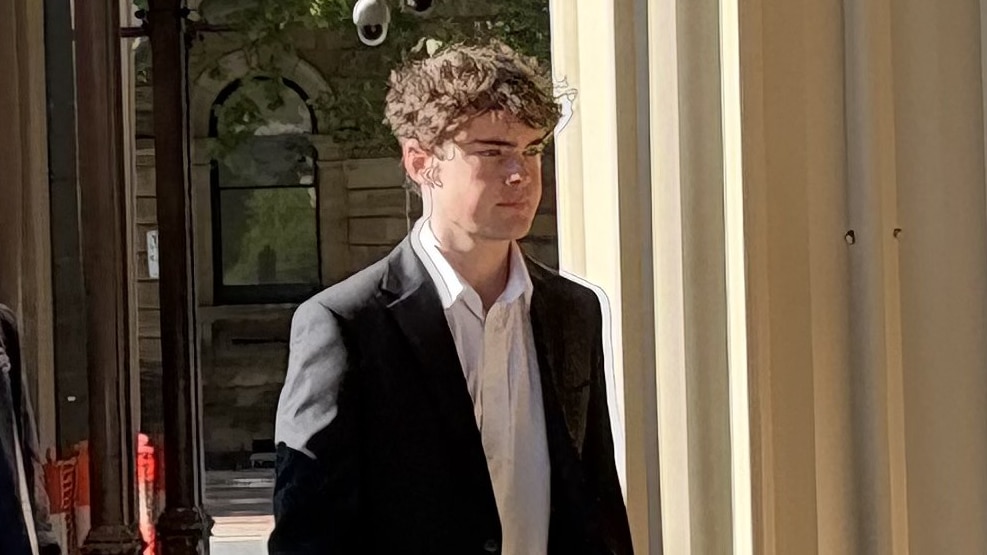
William Hamish Yeates, 20, of Netherby, previously admitted to creating sexually explicit deepfake images of a teenage girl before sharing them on online platforms Ero Me and X — formerly known as Twitter — in 2024 and 2025.
He also pleaded guilty to two counts of using a carriage service to menace, harass or cause offence and a count of using a carriage service to make personal data available.
Yeates, who at the time of the offending was aged 18, was the first person in Australia to be charged under federal laws introduced in 2024 to combat the rise of deepfake pornography.
At a pre-sentence hearing earlier this year, the court was told that a psychologist had diagnosed the 20-year-old with autism spectrum disorder (ASD) and compulsive sexual behaviour disorder (CSBD).
It also heard he was heavily involved in online communities where "it was very common to post nude images of women" and had been introduced online to self-misogynist and alleged rapist Andrew Tate.
In handing down her sentence today, District Court Judge Anne Barnett said she accepted the offending was "associated with obsessional thinking rather than hostility, resentment or any suggestion of revenge".
"I accept that you have developed a greater understanding of your offending in conjunction with your engagement in treatment," she told Yeates.
"The material before me indicates that your conduct became habitual.
"You've said that you derived a sense of belonging from participation in those online communities … further, that you had developed an obsessive preoccupation with the victim and had come to believe, albeit irrationally, that you were in a relationship with her."
The young man's 19-year-old survivor previously told the court in a pre-sentence hearing that, although fake, the images had a "painfully real" impact.
She also told the court the first time she saw her graduation photo was on a pornography website.
"They undoubtedly caused harm to [her] in identifying her as the person in the sexual material, notwithstanding they were generated using AI," Judge Barnett said today.
"Your offending has tainted what were, and should be, happy memories for her.
"The first time she saw her Year 12 graduation photo was on a pornographic website. As a consequence, she now reflects on her graduation day not with pride in her achievement, but with the torment of the memories of the altered content."
Judge Barnett said she accepted that Yeates's "compulsive sexual behaviour disorder predated [his] offending conduct and contributed to [his] use of pornography and ultimately led to the offending".
"I further accept that your youth and neurodevelopmental condition associated with your autism spectrum disorder, together with the associated social and cognitive deficits, materially influenced the development of your offending and impaired the maturity of your appreciation of its wrongfulness and likely consequences," she said.
"I find that those matters operate to reduce your moral culpability to some extent and consequentially moderate general and specific deterrents to some extent.
"They do not, however, excuse your conduct or diminish the harm occasioning to the victim. Nor does the absence of a malicious motive itself lessen the objective seriousness of your offending.
"Your offending involved the creation and dissemination of non-consensual AI-generated sexual material and the use of online platforms to humiliate, degrade and harass the victim."
Judge Barnett said that when arriving at an appropriate sentence, she "had regard to the fact this type of offending disproportionally targets women and girls".
"The creation and dissemination of degrading sexualised material without consent is capable of causing profound humiliation, distress and long-lasting harm — it undoubtedly has in this case," she said.
"Women are entitled to participate in online and public life free from harassment and intimidation and sexualised abuse."
Judge Barnett sentenced Yeates to two years and three months behind bars but released him on a recognisance release order for a period of three years with the condition he be of good behaviour.
Five minutes for you

More from Cuppa
Why new foldable devices are cracking and what Apple is doing to helpApple's new foldable iPhone Duo is cracking along the centre crease after just hours or days of use, and Apple is offering replacements through AppleCare.
The 'growing' health threat now responsible for one in 10 Australian deathsDementia has passed 10 per cent of all Australian deaths for the first time, with women accounting for more than 60 per cent of those deaths.
Leading Australian caravan maker collapses into administrationVictorian caravan maker Essential Caravans has collapsed into administration, the third Australian caravan business to fail in just two months.
Israel heads to polls for pivotal election defined by security and democracyIsraelis are voting in a tight election between incumbent PM Benjamin Netanyahu and former military chief Gadi Eisenkot, with neither bloc expected to win a majority.
Dementia now causing 10% of all Australian deathsDementia caused 10% of all Australian deaths last year for the first time ever, double the rate from two decades ago, with experts calling for urgent funding.
The fight for Jaysley Beck: how her grieving mother turned detective - and took on the militaryA British mother has spent five years fighting the military for answers after her 19-year-old soldier daughter took her own life following sexual assault and harassment.
Israel election live: polls open in most consequential vote in country’s historyIsraelis are voting in what is being called the most consequential election in the country's history, with polls suggesting Netanyahu's coalition is likely to lose its majority.
Do spiders dream? Scientists just found a surprising clueScientists studying an Australian jumping spider have found it experiences two distinct sleep stages, including one resembling REM sleep, suggesting sleep evolved across very different animals.