

 LifestyleABC News & Headlines
Magda Szubanski tells how finding community saved her young life
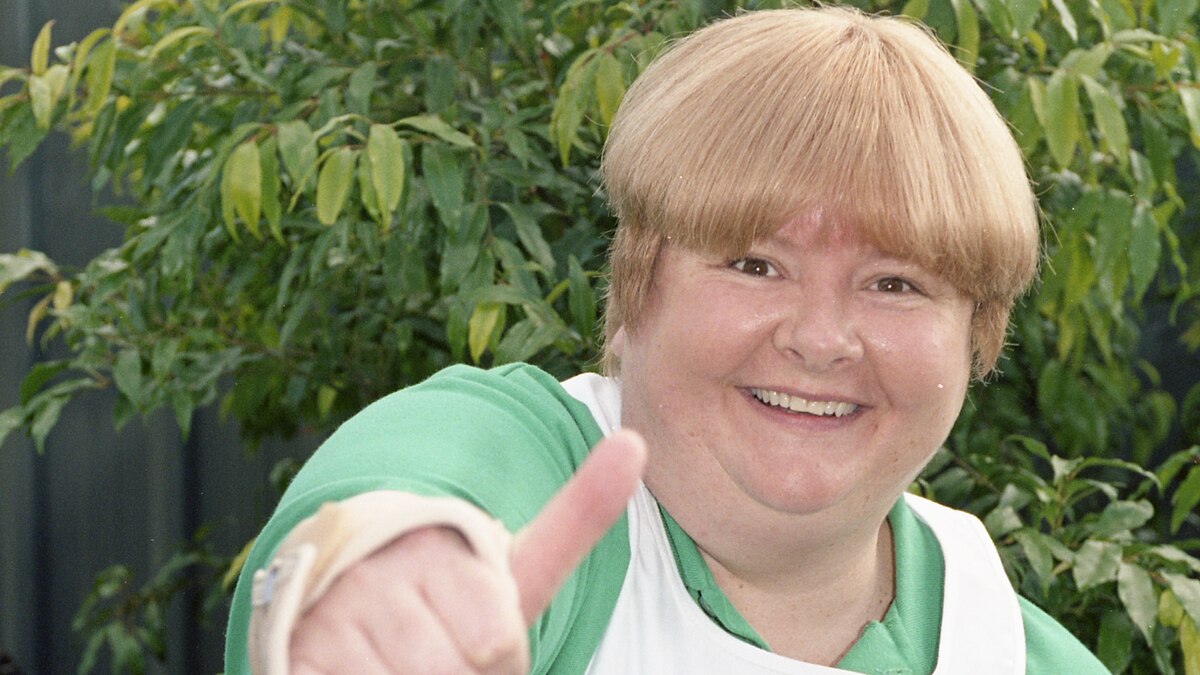
Magda Szubanski has opened up about feeling suicidal as a young gay woman in the 1970s, and how telling her sister saved her life.
While Magda Szubanski is famed for embodying the eternally optimistic Sharon Strzelecki in Kath & Kim, her off-screen life hasn’t always been a barrel of laughs.
Magda Szubanski has shared how growing up gay in an era when homosexuality was criminalised left her feeling terrified and deeply isolated.
She told ABC Conversations she felt suicidal as a teenager and finally confided in her sister, who gave her the love and support she desperately needed.
Now 65, Szubanski has written about her experiences in a new memoir, reflecting on a life shaped by secrecy, community and eventually finding her truth.
When Magda Szubanski's mother held her newborn daughter for the first time in 1961 she looked at baby Magda, her third child, and announced, "This one's for the world".
Sixty-five years on, after a career in comedy, on Australian TV, stage and movie screens, Mrs Szubanski's prophecy has all but come true with her daughter easily described as a national treasure.
While Szubanski is known for embodying the hilariously accident-prone and eternally optimistic Sharon Strzelecki in Kath & Kim, life hasn't always been a barrel of laughs.
In fact, the opposite was the case when, as a young gay person, she felt the intense isolation of growing up in an era when homosexuality was widely stigmatised.
"Realising I was gay was terrifying," Szubanski told Richard Fidler on ABC Conversations.
"I used to pray that I would not be gay."
With a Polish father and a Scottish mother, Szubanski was raised as a practising Catholic, hearing strict messaging condemning homosexuality.
It was a time when homosexuality was criminalised in many Australian states, and being openly gay could lead to being rejected by your family, friends and community.
Szubanski said the "terror" she felt that her secret would be found out was akin to living under Poland's post-war regime.
"Having been to Warsaw and having seen how circumspect people had to be under communism, that's what it felt like being gay," she said.
"You could not let your face betray anything. It was the most horrible feeling."
As a teenager, while she watched her older sister openly sharing anecdotes about her life with their mother, Szubanski withdrew.
"I wouldn't tell anything because I couldn't let anyone go near it because I knew they might find out," she said.
"I became even more isolated, until I eventually told my sister because I felt suicidal.
"I don't mean I started making plans, but I was just so desperate because I knew more and more that this was my truth and that it was going to, at the very least, have to be suppressed for my whole life, which was a form of misery."
At 17, Szubanski found love and support from opening up to her sister, but, as she has written in her latest memoir, coming out to the rest of her family was too uncertain.
"My parents were born in 1924. How would they react? There was simply no knowing," Szubanski wrote.
"In 1978, reactions to homosexuality were unpredictable like Russian roulette. I simply felt I couldn't risk it."
As an emotional distance from the rest of her family grew, things changed for Szubanski when she started university.
She found refuge and belonging through Melbourne University's Women's Room, and the "terrible shame" she felt about her sexuality subsided.
"When I got into that world, I didn't feel that [shame] so much. In fact, that changed completely," Szubanski told Conversations.
"Melbourne Uni saved me. It really actually saved me … I finally felt safe.
"Losing that intense, terrifying sense of isolation was literally a lifesaver."
Fighting for marriage equality
While Szubanski was openly gay among her comedic peers, it wasn't until Australia's same-sex marriage campaign reignited that she came out publicly.
It was Valentine's Day 2012 when she declared live on Channel 10's The Project that she was "absolutely not straight".
"I wouldn't define myself as bisexual either.
"I would say I am like gay, gay, gay, gay, gay, gay, gay, a little bit not gay, gay, gay, gay, gay."
It was a defining moment in Szubanski's advocacy for marriage equality that made national headlines. Szubanski was met with an outpouring of public support.
"And actually, the number of women who told me they felt incredibly relieved when I said that — because that was their experience — was great," she said.
Five years later, Australians voted in support of same-sex marriage.
Once the vote was passed, Szubanski said she felt "joy" as she celebrated the result.
"It was nothing but relief because we were safe. We were safe with the Australian public behind us," she said.
But for Szubanski, marriage equality is about much more than "love and rainbows".
"It's about helping someone to die. That's the thing that we have never felt safe with," she said.
"If you look at what happened to a lot of gay men during the HIV/AIDS epidemic, the way they were treated when their partner died was horrific, just absolutely discounted.
"It's having the right and the capacity to be able to be there at the worst time … caring for the people that you love."
'I knew something was wrong'
If Szubanski's younger years were marked by keeping a significant part of herself hidden, her experience with cancer was almost the opposite.
"I'd been feeling ill for a really long time," she said. "I knew something was really, really wrong."
After receiving a stage-4 mantle cell lymphoma diagnosis in May last year, a rare and aggressive cancer, Szubanski said she immediately turned to her support network.
"I just got on the phone … texting my friends and calling my friends," she said.
"I was just in complete shock for about two weeks.
"I started realising that it was gonna shorten my life expectancy. We don't know by how much, but at that point, before you've reached remission, it could be pretty drastic."
Her diagnosis was accompanied by something else unexpected.
"I felt — from me — this outpouring of love for my family, my friends and the world," Szubanski said.
"I just felt pure love. And I still feel that a lot of the time."
Szubanski says she is now in "deep remission" after completing chemotherapy and won't be doing maintenance therapy.
While her body is weak as she continues recovering, Szubanski says she's feeling like herself again.
"I feel strong in spirit, but physically I'm knackered," she said.
"I had dinner with my friends a few weeks ago, and they went, 'You're back. She's back.'"
With treatment behind her, Szubanski explained how her diagnosis has fundamentally shifted her perspective on life.
"It completely changes everything," she said.
"One is the uncertainty — the fear of relapse — because it's known as an incurable, relapsing cancer.
"And then there's the other thing; of not [having] much time for bullshit. 'Cause cancer is a full-time job."
Stream Magda Szubanski's full Conversations interview via the ABC Listen app.
Five minutes for you
More from Cuppa
Updated Google privacy policy says your Gmail might be used for advertisingGoogle quietly updated its privacy policy in October, opening the door to using your Gmail and Photos data for ad targeting if you have turned on its Personal Intelligence feature.
Wallaroos complete Scotland sweep as retiring Smith gets standing ovation despite redThe Wallaroos beat Scotland 38-31 to complete a three-game sweep, with retiring centre Cecilia Smith getting a standing ovation despite being sent off with a red card.
‘Black October’: cybersecurity experts sound the alarm over new era of AI-enabled hackingCybersecurity leaders are warning that AI is now finding critical flaws in internet infrastructure faster than they can be fixed, calling it a vulnerability tsunami.
Trump to exempt some Canadian products from tariffs amid midterm pressureTrump is set to scrap tariffs on some Canadian goods including farm equipment and packaging after Republican senators warned the levies were hurting their own states.
Moderna mRNA vaccine almost halves the risk of skin cancer returningA personalised mRNA vaccine cut the risk of melanoma returning by 42% in a major phase III trial, which researchers say is a remarkable result.
Meghan 'distressed' by child sex abuse image allegations against fatherMeghan, Duchess of Sussex, says she is deeply distressed by allegations that child sexual abuse images were found at her estranged father Thomas Markle Sr's former home.
Tiny Genetic Tweak From An Ancient Virus Might've Prevented Chimpanzees From Developing Brains Like OursA study found an ancient virus that infected chimps but not humans may have switched off a key gene, helping explain why human brains grew so much larger.
Irish researchers discover how cancers evade chemotherapy by entering ‘zombie-like state’Irish scientists have worked out how some cancer cells dodge chemotherapy by entering a zombie-like dormant state, and they have identified new drugs that could target this weakness.
What readers are saying