

 LifestyleABC News & Headlines
History behind Sydney's first international airport at Rose Bay, where flying boats were the norm
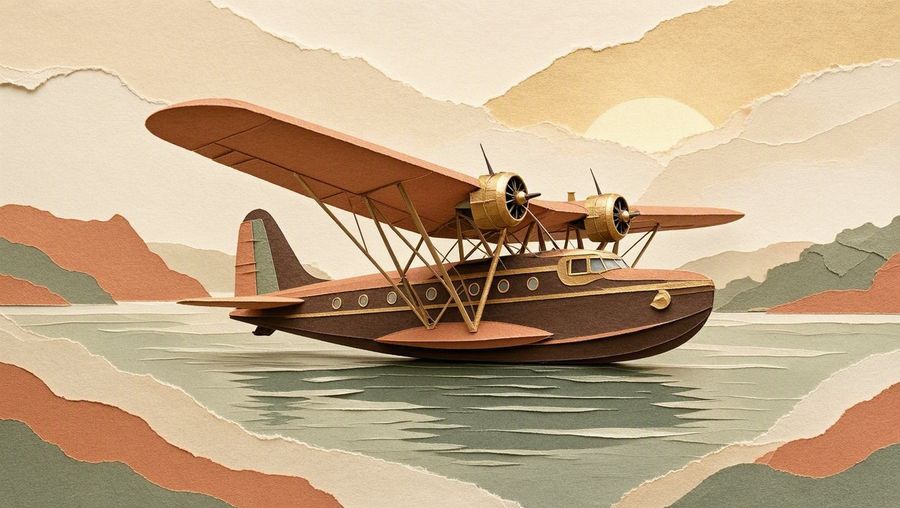
Before Mascot or Western Sydney, Rose Bay in Sydney's east was Australia's first international airport, serving glamorous flying boat services from 1938.
Before the new Western Sydney International Airport and the terminal at Mascot, there was Rose Bay in Sydney's east, which had a golden age of aviation via flying boats.
Rose Bay in Sydney's east operated as Australia's first international airport from 1938, hosting Qantas Empire Airways flying boat services to England.
A return fare from Sydney to Southampton cost about £342, roughly the same price as a new Chevrolet car at the time, and the trip took nine and a half days.
The glamorous passenger service ended when World War II began and the flying boats were redirected to assist with military activities.
Some may assume the new terminal in Western Sydney is the city's second international airport, but it is historically the third.
Almost a century ago, Sydney experienced its golden age of aviation via flying boats.
By the end of 1934, the first regular air mail service between Australia and England began.
Flying boats were the chosen mode of transport as they could carry much larger freight loads than the land-based aircraft of the time, and had cheaper operating costs.
That same year, Qantas Empire Airways was established as an international airline joint venture by Australia's Qantas and Britain's Imperial Airways.
In 1938 the airline moved its operations from Brisbane to Sydney, settling on Rose Bay in the east thanks to its calm waters and central location.
And so began the Rose Bay Water Airport.
While Rose Bay's airport was mostly used for mail services, expensive travel also became a commodity for wealthy travellers.
Flights travelled along the east coast to Singapore then via stops at Bangkok, Calcutta, Karachi, Alexandria, Basra, Marseilles and onto Southampton.
First class travel 'cream on the cake'
While air mail was the financial basis for the Qantas Empire Airways flying boats system, "the cream on the cake" was its first class offerings for passengers.
David Crotty, former curator of the Qantas Heritage Collection, who still does consulting work with Qantas, said the return fair from Sydney to Southampton was about £342.
"In those days it was a heck of a lot of money, considering you could buy a new Chevrolet car at that time in Sydney for about £330," he said.
The air trip would take approximately nine and a half days, compared to a five week ship journey.
"It was quite luxurious, it was unlike anything Australia had seen before," Mr Crotty said.
"The flying boats typically took somewhere up to 15 passengers, and there were a series of cabins. In one cabin you could smoke … there was room to wander around and the seats could be reclined back."
It was the first time Australia had in-flight service, with Qantas employing stewards who had worked on ships.
"They didn't cook on board but they had a little galley kitchen where warm meals could be served," Mr Crotty said.
It was a brief but "romantic period" for aviation, because when World War II heightened, the service's travel offering ended so the flying boats could assist with military activities.
How flying boats supported the war effort
The flying boats played a number of roles during World War II.
Civil Aviation Historical Society president Phil Vabre said this included shifting military equipment in Darwin to running services to Nouméa, which served as a base for the United States in the war.
"Later on they were largely employed up and down the east coast ferrying personnel, cargo and mail up into New Guinea in support of the war," he said.
"One by one they either were crashed, a couple were shot down … the air force had also taken some Empire flying boats early on in the piece."
It was not until after World War II that commercial land airports and their aircraft became more widely used.
"Flying boats were commercially difficult to operate … there's a lot of difficulty operating off water for various reasons," Mr Vabre said.
"During the war lots of big airports had been built all over the world and land planes had developed to a significant degree."
Rose Bay's enduring legacy
Rose Bay Water Airport had quite an impact on Sydney.
The first scheduled commercial passenger flight directly between Auckland and Sydney took place in 1940 on a Tasman Empire Airways Limited flying boat landing into Rose Bay.
In its later years, the flying boats at Rose Bay were used for passengers travelling to and from Lord Howe Island until the island's land airport was built in 1974.
Rose Bay Water Airport then closed that same year.
Today, Sydney Seaplanes has a base in Rose Bay, and there is a plaque nearby to mark the area's legacy.
Sydney Airport in Mascot became the city's primary aerodrome, with its international terminal officially opened by Queen Elizabeth II in 1970.
Almost 60 kilometres away in Badgerys Creek in Sydney's west, Western Sydney International Airport will open to commercial passenger flights from October 25.
Mr Vabre reflected on the importance of Sydney's first international airport.
"Rose Bay was important; it was the headquarters of our connection to Britain and the rest of the world by air," he said.
"Rose Bay is probably associated with the romance of the flying boats. There's just something about those graceful, old aircraft that are half boat, half airplane."
Five minutes for you




More from Cuppa
Jim Chalmers defended by Andrew Charlton after RBA rate hike and inflation surge pile pressure on Labor economyThe RBA raised rates to a 15-year high this week as inflation jumped to 4 per cent, and a senior Labor minister has stepped up to defend Treasurer Jim Chalmers.
Two helicopter rescues in Tasmania after separate bushwalker mishapsTwo Tasmanian bushwalkers needed helicopter rescues on the same day, prompting police to remind everyone to carry a charged phone or PLB on any walk.
Insider threat: what the FlyDubai attack reveals about aviation securityA FlyDubai copilot allegedly stabbed the captain mid-flight from Dubai to Tel Aviv, prompting a rethink of how airlines screen their own crew members.
‘This can’t go on’: tens of thousands protest against housing crisis in SpainTens of thousands of Spaniards took to the streets in Madrid and 50 other cities demanding action on a housing crisis after the government's new legislation was blocked by the opposition.
Former Cancer Council Queensland research boss alleges bullying amid turbulent workplace relationship with CEOThe former research director of Cancer Council Queensland has sued the charity, alleging she was bullied by the CEO and wrongfully dismissed.
Inside the study for a remedy to fight Congo's deadliest Ebola outbreakA drug trial testing an antiviral pill to prevent Ebola has enrolled more than 250 people in Congo, where the outbreak has already killed 4,000 people since May.
Tennessee's prisons chief quits after stunning failed executionTennessee's prisons chief has resigned after a botched execution left death row inmate Christa Pike on a ventilator in hospital following two doses of lethal drugs.
US Coast Guard searching for air ambulance, carrying 6, after it vanished on route to BostonA US Coast Guard search is underway off Nantucket for a Canadian air ambulance carrying six people that vanished while approaching Boston.
What readers are saying