

 WorldABC News & Headlines
Penny Wong warns US and China are eroding global rules as Australia seeks greater influence
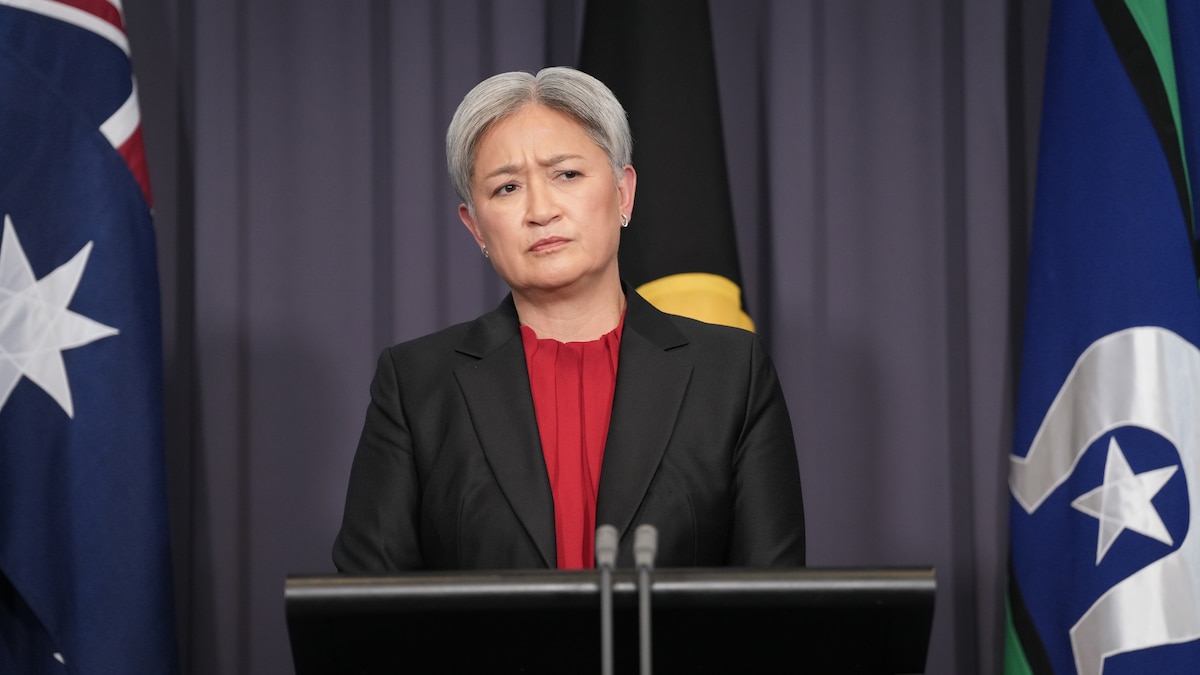
Foreign Minister Penny Wong is warning that the US and China are increasingly ignoring global rules, leaving countries like Australia more exposed and needing to build new alliances.
Foreign Minister Penny Wong says growing competition between the US and China is making the world more dangerous, and Australia must join forces with other nations to protect its interests.
Penny Wong will deliver a major foreign policy speech warning that US-China competition is eroding the international rules that have helped prevent major conflict for decades.
The speech follows Trump, Xi and Putin holding landmark talks in China, issuing a joint declaration that made no mention of the Ukraine invasion or the Iran war.
Wong argues Australia must deepen ties with neighbouring nations in the Indo-Pacific to protect its sovereignty as great power pressure intensifies.
The United States and China are increasingly willing to wield their power without regard for the rules that have helped prevent major conflict for decades, Foreign Minister Penny Wong has warned.
In a stark assessment of the world order, Senator Wong used a major foreign policy speech on Tuesday to say international institutions are increasingly paralysed by tensions between powerful nations, weakening their ability to resolve or prevent disputes.
"Rules without power cannot secure peace. Power without rules cannot sustain it," she said in an address to the Senate.
The warning comes days after US President Donald Trump, Chinese President Xi Jinping and Russian President Vladimir Putin held landmark talks in China, emerging with a joint declaration that did not refer to the Ukraine invasion or the Iran war.
Meanwhile, the Albanese government has been focused on strengthening Australia's influence in the Indo-Pacific, deepening security and economic ties with neighbouring countries while maintaining the US alliance and managing its relationship with China.
The diplomatic push continues this week with Prime Minister Anthony Albanese hosting Singapore's Prime Minister Lawrence Wong and Solomon Islands Prime Minister Matthew Wale in Canberra, following a series of summits with world leaders across Asia.
US, China and the great power divide
In her speech on Tuesday, Senator Wong declared Beijing was seeking to reshape the world in its own interests, while Washington was redefining its role and what it expected of allies, leaving countries like Australia facing greater pressure to protect their sovereignty.
"The great powers, the United States and China, are competing across every domain, with less regard for the guardrails that once kept competition from tipping into conflict," she told the Senate.
Senator Wong said the competition between the US and China remained the "strategic dynamic of our time", particularly in Australia's region.
She argued China was "intensifying" its efforts to "remake the multilateral system" and increasingly militarising disputed issues.
"China is undertaking the largest military build-up by any country since the Second World War, without the transparency and reassurance the region expects," she said.
Senator Wong also noted the US National Security Strategy released this year specifically said the "days of the United States propping up the entire world order like Atlas are over".
In the wake of the midterm elections, which delivered a resounding loss to the Republican Party and Mr Trump's MAGA movement, Senator Wong said the direction of US policy was "still being contested at home in ways that will affect the entire world".
Senator Wong told the Senate, Australia plans to continue to "clearly" state its views on areas of disagreement with China.
"We believe a stable relationship, in which differences can be managed, is better for Australia, better for China and better for our region," she said.
Middle powers have strength in numbers
Senator Wong argued that while the US and China remain the dominant global powers, countries like Australia, India, Indonesia, Japan and South Korea were gaining greater economic, diplomatic and military influence.
She said the number of mid-sized powers has nearly doubled since the end of the Cold War, while the US and China's combined share of global GDP has largely plateaued over the past decade.
But Senator Wong also warned that growing international instability has made it harder for smaller nations to protect their independence, let alone expand their influence.
"It is increasingly costly for middle powers and smaller nations to simply hold the strategic space they have, let alone expand it," she said.
Senator Wong argued Australia must deepen partnerships with like-minded countries to ensure the world's superpowers do not dictate its interests.
"Amplified middle power diplomacy characterises our approach, bringing together countries that can achieve more in partnership than any one of us could achieve alone," she said.
In addition to working with other countries in the region and traditional allies in Europe, Senator Wong said Australia was deepening its relationship with nations in Africa and Latin America.
Australia will not abandon international institutions
Senator Wong pitched Australia as a "strong defender" of multilateralism and said the government could not "pretend" global and regional institutions were "working as they should".
"The UN is facing serious financial pressures. Decision-making is too often paralysed by great power dynamics," she said.
The foreign minister argued the breakdown in international cooperation made it harder to address global challenges, with countries increasingly unable to reach consensus.
"And when the capacity to act collectively is weakened, every other challenge becomes harder to manage," she said.
But Senator Wong has rejected abandoning the multilateral system, instead calling for reform, including the UN Security Council.
"Middle powers would not help themselves by walking away from multilateralism because it's imperfect," she said.
"It would leave a vacuum, and vacuums are rarely filled by peace."
Five minutes for you




More from Cuppa
Greens leader Ellen Sandell defies own how-to-vote cardVictorian Greens leader Ellen Sandell voted differently to her own how-to-vote card on election day, preferencing the Animal Justice Party candidate third instead of an independent.
Child star takes swipe at J.K. Rowling after losing Harry Potter roleA 14-year-old actor who missed out on a Harry Potter HBO role said he prefers his new film anyway, and took a dig at J.K. Rowling in the process.
Two overlooked “forever chemicals” linked to up to 2.5 times the odds of liver cancerA new study links two lesser-known forever chemicals found in everyday products to up to 2.5 times the odds of developing liver cancer, especially in people with fatty liver disease.
AI labs sitting on ‘bombshell’ revelations that could cause global chaos, experts warnExperts warn AI may have secretly cracked the maths behind global encryption, which could expose banking and government communications worldwide.
House slips down hill as fresh landslide hits Mornington PeninsulaA fresh landslide at McCrae on the Mornington Peninsula has caused an unoccupied house to slide down a hill, with an emergency warning urging locals to stay away.
Clayton reveals Labuschagne backing amid Test switchJack Clayton is set to make his Test debut for Australia against New Zealand in Perth, replacing Marnus Labuschagne who reportedly gave him his full support.
Israeli strike on Doctors Without Borders clinic in Gaza kills two staffAn Israeli strike on a clearly marked Doctors Without Borders clinic in Gaza City killed two MSF staff, bringing the total MSF deaths in Gaza to 17.
Home damaged along troubled stretchA fresh landslide at McCrae on the Mornington Peninsula has damaged an unoccupied home, with nearby properties evacuated and roads closed.
What readers are saying