

 FinanceABC News & Headlines
Investor fears private credit mass exodus as ASIC cracks whip on lending standards
Australia's private credit sector is under fire from ASIC, which warns poor lending standards are causing the first serious cracks to appear.
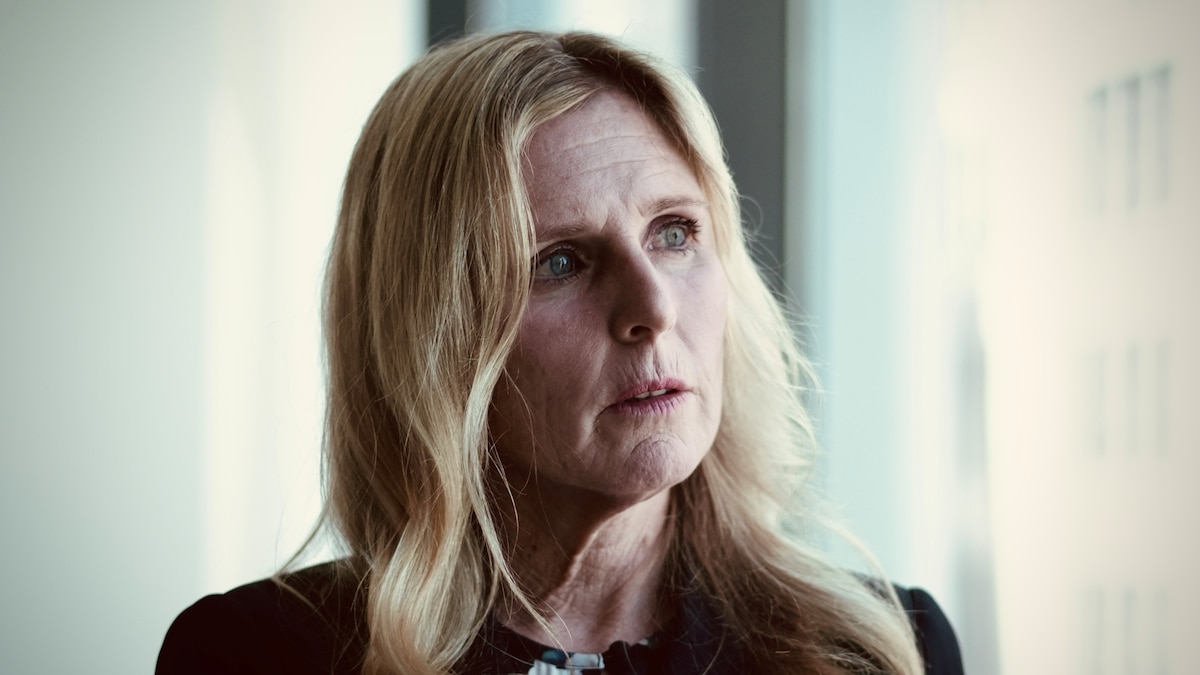
ASIC commissioner Simone Constant has fired a shot across the bow of Australian private credit, warning the clock is ticking on poor lending practices.
ASIC commissioner Simone Constant warned a Sydney finance gathering that the private credit sector is showing its first serious stress fractures.
Of 28 funds ASIC reviewed, only four published borrower interest rate information and fewer than half had written credit or default management policies in place.
ASIC set a 2027 deadline for the sector to lift standards, and the collapse of NSW developer Bathla shows the risks of slow action are already materialising.
ASIC has given the private credit sector until 2027, just three months away, to lift standards, so check if any managed funds you hold are private credit products.
ASIC has signalled there is no time to waste in preventing an Australian private credit crisis.
Today, ASIC commissioner Simone Constant will tell a gathering in Sydney hosted by the Commercial and Asset Finance Brokers Association (CAFBA) that the "clock is ticking" on "whether we see broader credit stress or not" in Australia.
The collapse of NSW property developer Bathla has highlighted how private lenders are exposed to financially vulnerable construction companies.
CVS Lane First Mortgage Fund and CVS Lane Property Finance Fund had exposure to Bathla across nine different loans.
"Our work has shone a light on the weaknesses in private credit, but despite our ongoing calls for uplift across the sector, too many have been too slow to respond," Ms Constant said.
"And what we're seeing now, as some of those weaknesses are tested at scale for the first time by current conditions, are the first significant cracks — the first stress fractures — beginning to emerge."
Private credit is any lending outside the banking sector.
While returns are relatively high, they come with risk, and it is growing.
One estimate has the sector domestically growing by 500 per cent over the decade, according to ASIC.
"But governance, controls and underwriting standards have not kept pace with this growth," Ms Constant said.
"The collapse of Bathla reinforces why strong governance, effective oversight, clear disclosure and accurate valuations are critical.
"We challenged the sector to lift standards by 2027 — that's three months away."
ASIC runs ruler over sector
Over the past 18 months, ASIC has intensified its scrutiny of private credit, beginning with its discussion paper on public and private markets.
"It was illuminating," Ms Constant said.
"The poorer practices — opaque remuneration and fee structures, inadequate governance arrangements, poor valuation practices, ineffective disclosure — were concerning and demanded scrutiny.
"That scrutiny came through two ASIC reports."
It painted a seriously concerning picture.
Of the 28 funds ASIC reviewed:
- Only four published information about the interest rates or ranges charged to borrowers.
- Less than half had detailed, written credit or impairment and default management policies in place.
- Most funds did not have adequate separation between those approving loans and those responsible for independently assessing their ongoing performance and value.
- And of the wholesale funds, only two performed stress testing as part of their liquidity risk management.
"These were clearly red flags — particularly when we think about the critical risks to be managed in private credit such as credit and liquidity risk, and the fundamental importance of effective disclosure in such a widespread and growing space," Ms Constant said.
The second report assessed private market reporting practices globally.
It found Australia falls well south of the line of information and disclosure of other comparable jurisdictions like Singapore, the US, the UK and even Switzerland.
But Wall Street is ground zero for the alternative investment market and there are fears this massive, risky US private lending ship is sinking and investors are jumping out.
"Globally funds under management have quadrupled in a similar time frame and it's estimated that there are now more private equity funds in the US than McDonald's stores," Ms Constant said.
Global investment bank Morgan Stanley announced late last week it was curbing redemptions at its nearly $US7 billion ($9.5 billion) private credit fund again in the third quarter.
Investors requested more than twice the amount the fund was willing to repurchase.
The North Haven Private Income Fund capped withdrawals at 5 per cent after investors asked to pull 11.4 per cent of shares, according to a shareholder letter.
'Contagion risk'
But the private credit risks for Australia are growing too, especially in the real estate and construction sectors.
And millions of Australians are exposed to private credit — some through direct fund investment, others through shares in credit fund managers, but many through their superannuation fund.
FinCap executive chairman Christian Ryan told the ABC that a contagion or broad, rapid exit of cash out of the sector was "possible".
"That is why some funds are getting ahead of this given the general negative sentiment in the sector," Mr Ryan said.
That is, Mr Ryan said, some funds locally have begun to limit redemption as a precautionary measure to prevent investor panic.
"If you reflect on the material collapses in the past where retail investors in particular have been caught out with investors directly, this type of mechanism is enacted sometimes too late."
But, he said, many private credit funds were well run by their managers.
"There are losses from time to time and being a credit manager, it is about limiting this risk as much as possible before investing," he said.
"I do know that many of the fund managers have great people that will be doing whatever they can in the background to look after investor funds."
Speaking at a federal parliamentary hearing on Friday, Reserve Bank governor Michele Bullock also indicated Australian private credit risks were being contained.
"Our assessment is that, on the whole, the non-bank lending activity we've observed is helping to, for instance, provide the financing that's important for greenfield construction, but we don't have a strong sense that there's been a systematic weakening of lending standards," Ms Bullock said.
"Our assessment there would be that any weakening in lending standards in that segment are primarily going to be a problem for investors who invested in those funds.
"It doesn't speak to a systemic issue."
ASIC laying down the law
The corporate cop is not taking any chances on private credit and the risks it may pose to the financial system.
"We're now beyond warnings," Ms Constant said.
"The sector should prepare for enforcement action.
"The stress fractures we're starting to see represent a line in the sand for private credit."
The next step, Ms Constant will tell the gathering today, is for other industry associations to develop and adopt their own compliant, good-practice standards and of course for the member funds themselves to sign up to them.
"Even without the associations, our road map is there," she said.
"If you are a private credit fund who hasn't assessed yourself against our 10 principles of private credit done well, ask yourselves — why not?
"Before your investors do."
More from Cuppa
Major US outlets boycott shared Trump coverage in protest at media banMajor US TV networks suspended shared White House coverage after Trump banned CNN, Politico and MS NOW, and the three outlets filed a lawsuit against his administration.
Four Corners episodes breached ABC's editorial standards, ombudsman's investigation findsThe ABC's independent ombudsman found two Four Corners episodes by sacked reporter Mahmood Fazal breached editorial standards for accuracy and fact-checking.
Terry Denton, children's author and illustrator behind Treehouse series, dies aged 76Terry Denton, the beloved illustrator behind the Treehouse book series, has died aged 76, surrounded by his family.
Film studios shun women, but men make them less money, report showsA new study found films written by women earn studios 34% more profit than male-only productions, yet women still get far smaller budgets.
Meet Barbie Pig: new documentary reveals the wonders of life on the Pacific seabedA new documentary follows scientists from London's Natural History Museum exploring the deep Pacific seabed, racing to identify new species before industrial mining destroys them.
Mixing energy drinks with coffee or matcha? CASE warns teenagers about caffeine intakeSingapore's consumer watchdog warns teens that mixing energy drinks with coffee or matcha can easily push caffeine intake to nearly three times the safe daily limit for adolescents.
First-ever T. rex trackway found by high school teacher in North DakotaA high school teacher in North Dakota discovered the first-ever connected sequence of T. rex footprints, estimated to be 66.5 million years old.
Teams: Roosters coach’s huge call as Walker return confirmedSam Walker has been named to start for the Roosters in Friday's NRL preliminary final despite only recently having ankle surgery.
What readers are saying