

 FinanceABC News & Headlines
Capital gains startup exemptions heads for Senate inquiry, leaving open possibility of wider carve
A push to exempt all active businesses from Labor's capital gains tax changes is heading to a Senate inquiry, keeping the door open for broader reform.
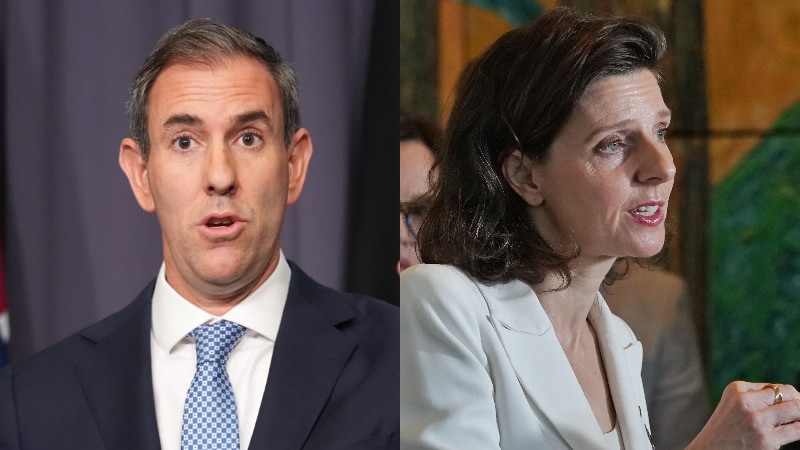
Allegra Spender's proposal to carve out all active businesses and business assets from Labor's capital gains tax changes could yet succeed, with the carve-outs issue to be referred to a Senate inquiry.
Independent MP Allegra Spender's proposal to give all active business assets a flat 40 per cent capital gains tax discount is headed for a Senate inquiry.
Treasurer Jim Chalmers has reservations but a senior government source said the inquiry referral was all but certain and would be confirmed soon.
Pushing the matter into next year via an inquiry makes it a real possibility that the government's narrower innovation carve-out could be broadened.
If you own a small business or startup, watch this inquiry closely as it could determine whether you get a flat 40 per cent CGT discount instead of the inflation-linked one.
A push to exempt every active business from Labor's new capital gains tax regime is headed for a Senate inquiry, despite Treasury's strong reservations about the idea.
The proposal by independent MP Allegra Spender would apply a flat 40 per cent capital gains tax discount to all active assets, a term that captures anything used, or ready to use, to operate a business.
Mr Chalmers wrote a letter to Ms Spender last week saying her idea would not be "simpler, fairer, or enhance productivity" compared to his proposal, which applies a discount tied to inflation, with a narrower carve-out for "innovative" businesses.
But while he repeated those concerns in Question Time on Wednesday, Mr Chalmers said an inquiry was "a possible outcome".
A senior government source went further and said it was all but certain and would soon be confirmed.
The government struck a deal with the Greens on Wednesday to pass the 30 per cent minimum tax on discretionary trusts, another key budget measure. Multiple sources with knowledge of Senate negotiations said that was the government's main priority.
While Mr Chalmers has given no direct indication that he is open to amending his innovation carve-out along the lines of Ms Spender's proposal, an inquiry would push the matter into next year and make that a distinct possibility.
Where to carve the line?
The debate stems from the anger of the startup sector about the May budget decision to apply the new inflation discount to businesses and shares, not just to housing.
Startups said an inflation discount would leave them worse off than the existing 50 per cent discount, because an inflation discount is calculated based on the starting cost of an asset. Startups without physical assets often begin near zero, meaning no discount.
The government acknowledged these concerns in budget week and promised to consult on an alternative.
The innovative business carve-out was the result, giving any eligible business younger than 15 years the choice between the new discount and the old one.
But Ms Spender and some business groups said this was too narrow and that deciding which businesses were "innovative" would be too subjective.
Ms Spender said a flat 40 per cent discount for active assets would be simpler and raise similar revenue.
In his letter, Mr Chalmers outlined three main concerns, informed by Treasury analysis. The first was that a flat 40 per cent discount would see business pay more tax in some circumstances than under an inflation discount.
The second was an integrity concern that a business would be deemed "active" as long as 80 per cent of its assets are active, creating a loophole for people to put large passive assets such as properties into otherwise-active businesses to escape the tax.
The third was a complexity concern that businesses and their shareholders would need to maintain an ongoing list of which assets were active and which were not, adding a layer of red tape to the tax system that does not currently exist.
Can the gap be bridged?
Ms Spender has discussed the idea in private with Mr Chalmers, as both have publicly indicated, and also with Prime Minister Anthony Albanese.
Ms Spender has indicated that she is receptive to modifying her proposal to address the integrity concerns.
The concern that some businesses could pay more tax could be addressed by simply allowing them to choose between the old discount and a 40 per cent discount, similar to Labor's current proposal. It's unclear how the complexity issue could be solved.
Ms Spender has emphasised the support from many business groups for her proposal, including the Australian Chamber of Commerce and Industry.
She has argued that the government could repair its troubled relationship with businesses and their advocates.
The Coalition has attacked Ms Spender's idea, with Shadow Treasurer Tim Wilson going so far as to liken her to Neville Chamberlain, the British prime minister best known for appeasing Adolf Hitler, an analogy Mr Chalmers has said was not "appropriate".
The Greens have suggested they are open to considering Ms Spender's proposal, but have no major issues with the government's innovation exemption.
The minor party agreed to pass trust laws on Wednesday in exchange for extra funds for the Australian Tax Office and the Charities Commissioner to scrutinise donations made from trusts to private schools, religious organisations and others.
On the capital gains issue, Mr Chalmers told the parliament on Wednesday he would welcome a debate. "I genuinely appreciate all the engagement on this issue," he said.
"There's a range of views, including in the business community, about the government's objectives and the government's policy. In this regard, we take them seriously."
Five minutes for you

More from Cuppa
Greens leader Ellen Sandell defies own how-to-vote cardVictorian Greens leader Ellen Sandell voted differently to her own how-to-vote card on election day, preferencing the Animal Justice Party candidate third instead of an independent.
Child star takes swipe at J.K. Rowling after losing Harry Potter roleA 14-year-old actor who missed out on a Harry Potter HBO role said he prefers his new film anyway, and took a dig at J.K. Rowling in the process.
Two overlooked “forever chemicals” linked to up to 2.5 times the odds of liver cancerA new study links two lesser-known forever chemicals found in everyday products to up to 2.5 times the odds of developing liver cancer, especially in people with fatty liver disease.
AI labs sitting on ‘bombshell’ revelations that could cause global chaos, experts warnExperts warn AI may have secretly cracked the maths behind global encryption, which could expose banking and government communications worldwide.
House slips down hill as fresh landslide hits Mornington PeninsulaA fresh landslide at McCrae on the Mornington Peninsula has caused an unoccupied house to slide down a hill, with an emergency warning urging locals to stay away.
Clayton reveals Labuschagne backing amid Test switchJack Clayton is set to make his Test debut for Australia against New Zealand in Perth, replacing Marnus Labuschagne who reportedly gave him his full support.
Israeli strike on Doctors Without Borders clinic in Gaza kills two staffAn Israeli strike on a clearly marked Doctors Without Borders clinic in Gaza City killed two MSF staff, bringing the total MSF deaths in Gaza to 17.
Home damaged along troubled stretchA fresh landslide at McCrae on the Mornington Peninsula has damaged an unoccupied home, with nearby properties evacuated and roads closed.
What readers are saying