

 AustraliaABC News & Headlines
AI inquiry backs creator payments, tougher safeguards and data centre licensing
A parliamentary inquiry has recommended Australian artists be paid when their work is used to train AI, with draft laws expected early next year.
A parliamentary inquiry has backed finding a new way to compensate Australian artists for their work being used to train AI, but the music industry remains opposed to any changes.
A cross-party parliamentary committee released 46 recommendations on AI regulation, including a payment scheme for artists whose work trains AI models.
The music industry rejected the push, and News Corp warned that voluntary commercial rights deals would amount to state-sanctioned theft.
The government is expected to introduce a series of bills on AI safety, data centres and copyright early in the new year.
Draft legislation covering AI safety, data centre standards and creator payments is expected to be introduced early in the new year, so watch for public consultation.
Labor has secured cross-party backing to change Australia's copyright laws to ensure creatives are paid for their work when it is used to train artificial intelligence (AI), despite fierce resistance from the music industry.
The Joint Select Committee on Artificial Intelligence released its report today, making 46 recommendations to the federal government, including a payment scheme that would compensate individual artists and copyright holders when their material is used to train AI models in Australia.
But the music industry has rejected the premise that existing copyright protections were inadequate, while News Corp Australasia warned that if the push toward commercial rights deals without voluntary agreements, it would amount to "state-sanctioned theft".
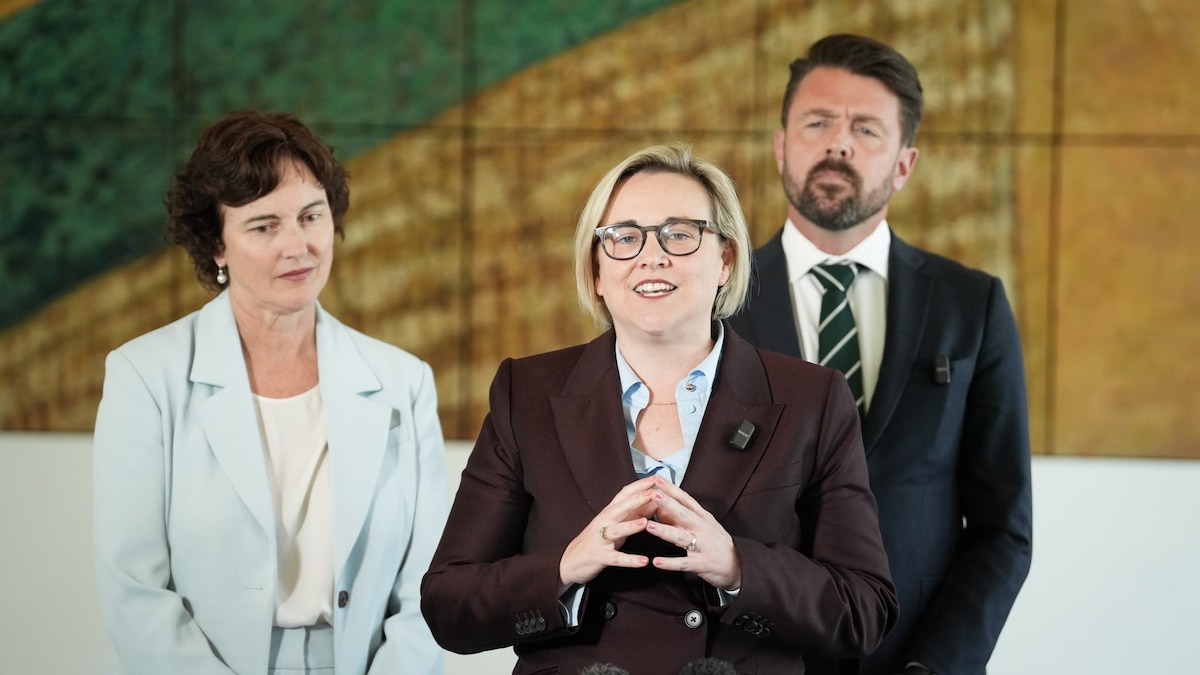
Labor committee chair Jo Briskey, Liberal deputy Jonno Duniam and crossbench member Kate Chaney all marvelled at the level of agreement the committee had achieved, even though they failed to reach consensus on which energy sources AI data centres should be required to use.
Ms Briskey said the report was about Australia "taking control" of the "most transformative technology of our lifetime".
"We know that these AI companies want to come here," she said.
"We have power, we have a stable government, and so we want to leverage off that."
Independent ACT senator David Pocock was also on the committee but ultimately wrote a dissenting report, breaking with the group over copyright, energy and concerns that his colleagues had taken an "overly optimistic" view of the benefits of AI.
The government is expected to unveil draft legislation covering data centre standards, AI safety and a proposal on copyright early in the new year across what would likely be a series of bills.
Labor and Coalition split on renewables-only data centres
The committee report agreed data centres must bring their own power, which should primarily be the cheapest form of generation available, be net contributors to Australia's energy grid and that households should not face higher electricity prices.
But there was no consensus on the extent to which the government should "specify" the energy source requirements, though Ms Chaney added comments supportive of a renewables-only approach to data centres.
"We can't let AI companies drive up our prices or our emissions, and so it's going to be really important, in my view, that renewables are powering data centres in Australia," she said.
Asked about splitting the AI legislation into different parts, Senator Duniam said it made "sense" to have issues like copyright dealt with "separately" from "matters relating to planning and environmental approvals, for example".
Music industry rejects any change to copyright
The committee made eight recommendations on copyright, arguing laws should be "strengthened" to facilitate payments to Australian creators, that there be transparency around the data being used to train models, along with strong penalties for breaches.
But advocates in the music industry and other rights holders have continually asked the government to leave the existing copyright system in place and force AI companies to do deals.
Australian Recording Industry Association (ARIA) chief executive Annabelle Herd said the recommendations appeared "detached from the strong and repeated evidence of rightsholders".
"We reject the notion expressed in the majority committee report that existing copyright law does not work and that we need a so-called 'fairer way to ensure creators get paid'," she said.
Ms Herd said piracy on a "mass scale" in another jurisdiction was not a reason to "legalise unlicensed copying in Australia".
"Copyright owners have asked again and again for government to make AI companies come to the negotiating table," she said.
News Corp Australasia executive chairman Michael Miller said encouraging commercial deals "sounds right" but feared the report lacked the detail rights holders need to "set their own terms of trade and receive fair payment".
"Any framework that lets trillion-dollar AI platforms scrape content without voluntary agreements isn't innovation, it's state-sanctioned theft," he said.
Defending the committee's approach, Ms Briskey said the current system was not working for creatives.
"We need to deliver a better outcome for Australian creators," she said.
"We need to see them have control, and we need to see them be paid.
"That is not happening right now."
Pocock says committee is 'overly optimistic' about AI
Senator Pocock said today he was concerned about the "heroic assumptions" around the benefits Australia would gain from hosting frontier AI training.
"[The committee report] relies on evidence from big tech, from those who are really pushing hard for data centre investment, for Anthropic and OpenAI to set up shop here, training their models," he said.
"I think we need to take a more cautious approach based on … the concerns from communities around AI and data centres, and the dire warnings we're having from these very companies that are creating the technology."
Senator Pocock said he also wanted a three-year freeze on any changes to copyright to test if current laws were able to force the AI companies to pay for works they were using to train their models.
Finally, he took issue with the failure to mention diesel in the final report, arguing millions and millions of litres would be stored and used in data centres across Australia.
Tougher safeguards and a push for homegrown AI
Across the rest of the 263-page report, the committee made dozens of other recommendations to address gaps in how Australia currently regulates AI.
The majority's report called for a licensing system for data centres; that proposal would be used to enforce the government's proposed rules for power and water usage as well as the location of the infrastructure.
The committee also asked for obligations around monitoring and reporting AI-related incidents.
While the report reiterated its interim advice to reserve computing capacity, the language around the final recommendation was softened to "consider" making it a condition for significant AI infrastructure projects.
It also urged the government to boost the funding for the government's AI Safety Institute by at least tenfold, up from its existing $30 million budgeted for four years.
A recommendation to promote the development of Australian AI models urged the government to buy more from domestic companies as a way of support.
"We must be makers, not simply takers of this technology," the report said.
Five minutes for you


More from Cuppa
Greens leader Ellen Sandell defies own how-to-vote cardVictorian Greens leader Ellen Sandell voted differently to her own how-to-vote card on election day, preferencing the Animal Justice Party candidate third instead of an independent.
Child star takes swipe at J.K. Rowling after losing Harry Potter roleA 14-year-old actor who missed out on a Harry Potter HBO role said he prefers his new film anyway, and took a dig at J.K. Rowling in the process.
Two overlooked “forever chemicals” linked to up to 2.5 times the odds of liver cancerA new study links two lesser-known forever chemicals found in everyday products to up to 2.5 times the odds of developing liver cancer, especially in people with fatty liver disease.
AI labs sitting on ‘bombshell’ revelations that could cause global chaos, experts warnExperts warn AI may have secretly cracked the maths behind global encryption, which could expose banking and government communications worldwide.
House slips down hill as fresh landslide hits Mornington PeninsulaA fresh landslide at McCrae on the Mornington Peninsula has caused an unoccupied house to slide down a hill, with an emergency warning urging locals to stay away.
Clayton reveals Labuschagne backing amid Test switchJack Clayton is set to make his Test debut for Australia against New Zealand in Perth, replacing Marnus Labuschagne who reportedly gave him his full support.
Israeli strike on Doctors Without Borders clinic in Gaza kills two staffAn Israeli strike on a clearly marked Doctors Without Borders clinic in Gaza City killed two MSF staff, bringing the total MSF deaths in Gaza to 17.
Home damaged along troubled stretchA fresh landslide at McCrae on the Mornington Peninsula has damaged an unoccupied home, with nearby properties evacuated and roads closed.
What readers are saying